
How Do You Inspect 4,100 Boxes Per Hour Across Six Faces With a Constantly Changing Print?
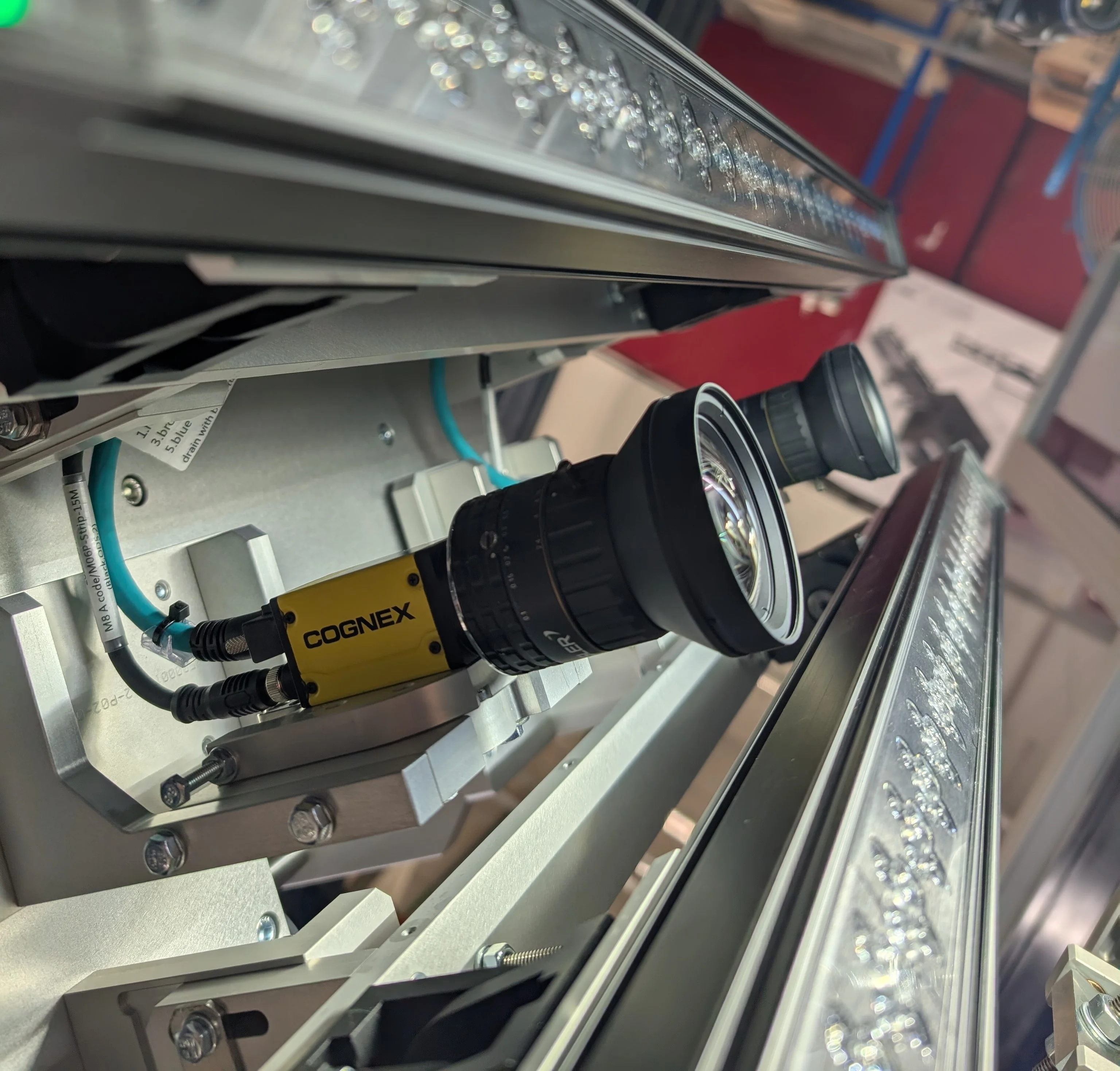
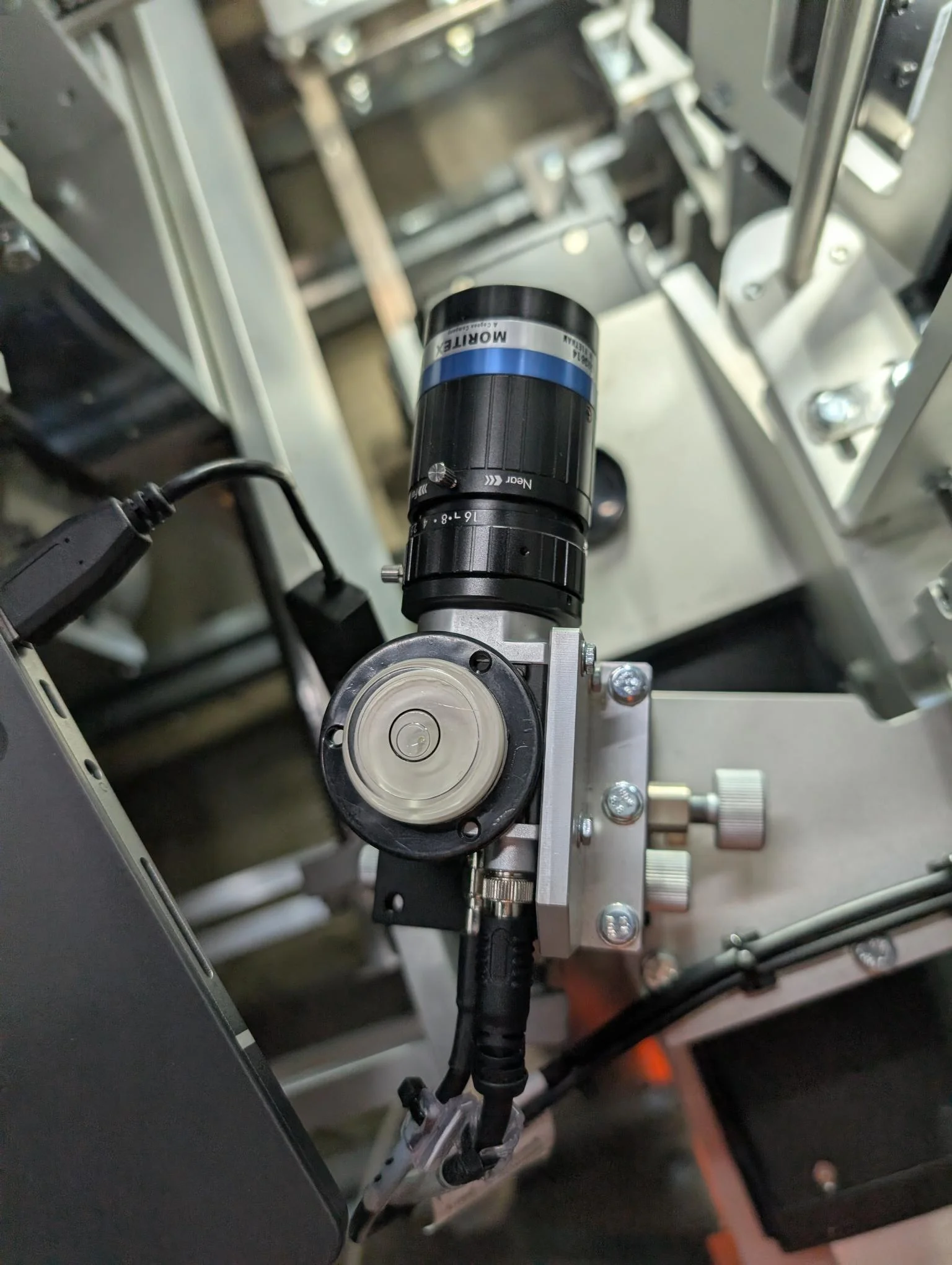
A major automation integrator commissioned Fisher Smith to build an inspection system for a high-profile toy manufacturer. The product is a premium boxed item sold at significant retail price points, where packaging quality is commercially important. Boxes carry licensed graphics including film and franchise-related artwork, meaning the print changes regularly as product ranges evolve.
The inspection requirement covers all six faces of each box for excess glue, box deformation, scuffed or damaged edges, print quality defects, and anything else that would mean a box arriving with a consumer in unsatisfactory condition. The line runs at 30 metres per minute, producing between 1,400 and 4,100 boxes per hour depending on box size.
Why couldn’t this be solved with conventional vision?
“It couldn’t be solved with smart cameras, therefore it couldn’t be solved by a PLC engineer. This needed vision expertise that you can only get from vision experts.” — Reece Donneky, Fisher Smith
Conventional rule-based vision systems establish what good looks like and flag deviations. That approach works well for products with stable, consistent appearance. It breaks down when the product graphic changes constantly — a rule-based system trained on one licensed box graphic will not reliably inspect a new franchise box without being reprogrammed. At high speed, across six faces, with dozens of active product variants, that model is unworkable.
AI changes the problem. Rather than defining what a good print looks like for each product, the AI model learns what defects look like regardless of the underlying graphic. Excess glue is excess glue on product box one or product box two. A scuffed edge is a scuffed edge. The model separates fault characteristics from product variation, allowing the same system to handle an expanding graphic portfolio without reconfiguration.
The technical architecture: why both camera types?
Inspecting all six faces of a box moving at 30 metres per minute is not a single-camera problem. Fisher Smith’s solution uses two complementary camera technologies chosen specifically for their respective strengths.
Line scan cameras are deployed for the main flat faces of the box, building images one line at a time as the product passes and producing very high-resolution images of large flat surfaces without the geometric distortion that affects area scan cameras at speed. For print quality inspection on flat panels, line scan cameras offer the resolution and consistency needed to detect fine print defects reliably.
Area scan cameras are positioned at angles to capture the leading and trailing edges, and the corners, of each box — faces that cannot easily be captured by line scan cameras due to the geometry of the conveyor setup. The combination allows the system to achieve equivalent effective resolution across all six faces, necessary for consistent defect detection regardless of which face a fault appears on.
What were the biggest engineering challenges?
Speed and colour complexity are the headline challenges. A colour AI vision system inspecting print quality at 4,100 boxes per hour, across constantly changing graphics, is at the demanding end of what any vision platform can do.
“This is really bloody hard. That’s why our most experienced engineer has been on site for over four weeks.” — Reece Donneky
The second major challenge was UL certification. The system is destined for US deployment, which requires compliance with UL standards, the American equivalent of CE marking for electrical equipment. Not all components specified for the system had existing UL certification, requiring Fisher Smith to pursue independent certification for specific items. To support the UL certification process, three computers were purchased — one for each of the two production lines, and a third dedicated to UL testing, which involves destructive ESD testing. The compute hardware alone cost approximately £90,000.
What happens when the product range changes?
This is where the system delivers long-term value. Fisher Smith designs, commissions and validates the initial AI models for the first three product ranges. After that, the customer can train new product models independently. When a new licensed product range is introduced, the manufacturer’s team can add it to the system without needing to involve Fisher Smith — that autonomy was a specific customer requirement, and the system is built to support it.
The same principle applies to defect types. As the manufacturer’s understanding of quality issues evolves, the AI models can be updated and refined. The platform is not a static inspection gate: it is an adaptive quality system.
How does this data improve the wider production line?
A pass or fail result is only the most immediate output. The same inspection data, captured consistently across thousands of boxes per hour, gives manufacturers a level of process visibility they did not have before.
If a particular box size starts generating an unusual number of glue faults, that pattern shows up in the data well before it becomes a significant scrap problem. Rather than treating each reject as an isolated event, the manufacturer can trace the trend back to a specific product type and use it to fine-tune the gluing machine for that size, addressing the root cause rather than the symptom. High-speed, accurate inspection generates a continuous, reliable dataset on exactly where and how defects occur — a window into the health of the entire production line, not just a gate at the end of it.
Key takeaways
- AI vision separates defect characteristics from product graphic variation, enabling inspection across an unlimited print portfolio.
- Line scan cameras on flat faces and area scan cameras on edges provide consistent resolution across all six box faces.
- The system runs at 30 metres per minute, handling 1,400 to 4,100 boxes per hour depending on box size.
- UL certification was obtained for US deployment, including third-party component testing.
- The customer can train new AI models independently as product ranges expand.
Frequently asked questions
Why use both area scan and line scan cameras?
Line scan cameras produce high-resolution images of flat surfaces at high speed. Area scan cameras are better suited to capturing angled views of edges and corners. Using both technologies allows the system to achieve consistent resolution across all six faces of the box.
Can the system handle a product it has never seen before?
Not immediately. New products require an AI training process using sample images of acceptable and defective product. However, once the initial platform is commissioned, the customer can perform this training independently without Fisher Smith’s involvement.
How does AI detect defects without knowing what the box should look like?
The AI model is trained on examples of specific defect types — excess glue, surface scuffs, deformation — across multiple product variants. It learns to recognise the visual characteristics of defects rather than comparing against a stored reference image of a specific graphic, allowing it to identify faults on graphics it has never seen before.
What speed does the system operate at?
The line runs at 30 metres per minute linear speed, which equates to between 1,400 and 4,100 boxes per hour depending on the dimensions of the box being run.
If you need to inspect fast-changing packaging graphics at production speed, without reprogramming every time the print changes, contact Fisher Smith to discuss how an AI-based vision platform could work for your line.