LED Lighting
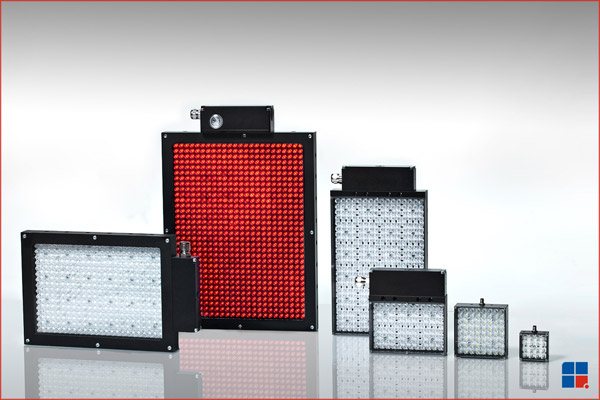
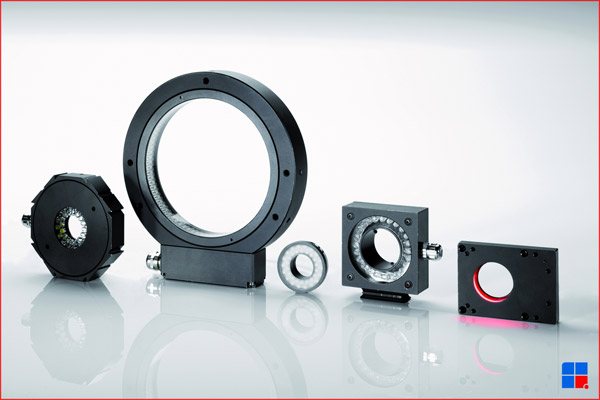
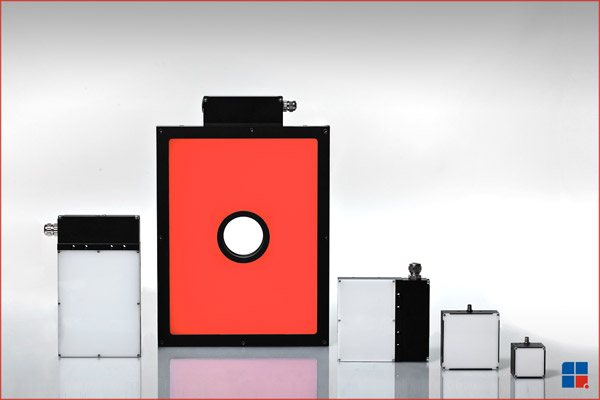
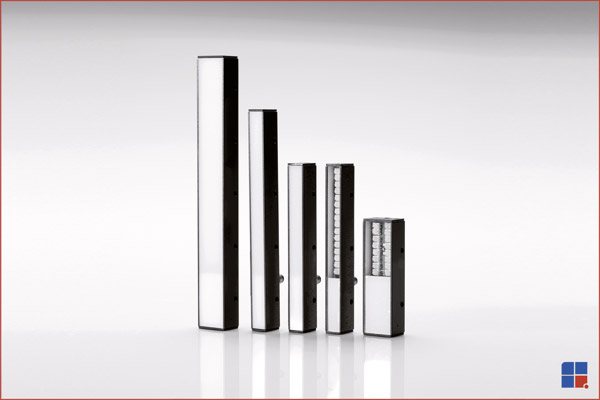
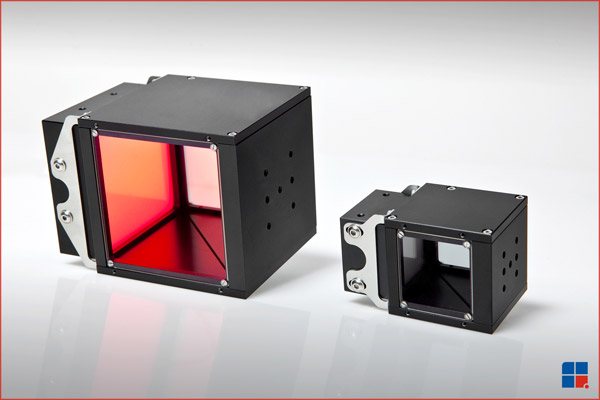
Lighting is critical to the success and reliability of machine vision systems. As it is the only data the camera uses, lighting should be considered very carefully. The ideal is to highlight the areas of interest with a strong contrast to any "background" areas. The lighting should also be as consistent as possible to ensure that any variations detected are due to the object only. Optimising the lighting (and the optics) will also help to ensure that the image processing is as simple and robust as possible.
With over 1800 models to choose from, let us suggest the best solution for your application. For special applications and OEM solutions, customised versions can be designed and built to perfectly suit your requirement.
Our preferred range of lights has the following key features:
- Integrated control as standard, stable brightness across a range of voltages meaning you don't need to purchase a separate controller
- Brightness control
- Lighting can be switched on and off via an optically de-coupled PLC input down to 10µs
- Optional high-brightness pulsed or flash operation for up to 20x more light
- EMC and endurance tested. CE certified
- Robust, industrial, dust-sealed, sturdy housings designed for tough working environments
- Oil-resistant, dragline-compatible cables with high resistance to repeated bending and stretching
- Defined, sturdy mounting and adjustment points
The best heat-removal and vibration-resistant components ensure an operational lifetime typically 50,000 hours or more (continuous use).
- Defined and targeted light distribution with maximum brightness using state-of-the-art LED technology in each case
- Long operational life due to temperature management and special LED sorting
- All types of lighting principles — incident light, transmitted light, ring-lighting, dark field lighting, telecentric lighting — are available as components
- Almost all wavelengths/colours including IR, UV and white light are used
- Best homogeneity over the entire illuminated area
Frequently asked
What are the main differences between the different IR wavelengths?
With 850nm infrared, most standard CCD chips have a significantly higher sensitivity for these wavelengths. Infrared at 880nm is the standard IR wavelength for most LED lighting and the optimal wavelength in conjunction with many filters. Infrared 950nm is primarily for machine vision applications in the semiconductor industry — light penetrates slightly into the semiconductor material and can thus produce special surface effects.