
Deep Learning & AI
Deep Learning for Factory Automation
Deep learning technology is used in advanced manufacturing practices for quality inspection and other judgment-based uses. It combines artificial intelligence with machine vision.
Deep learning solutions
- Smart cameras — Cognex D900 series
- PC based vision — Cognex Vidi
- PC based vision — Halcon
What is deep learning?
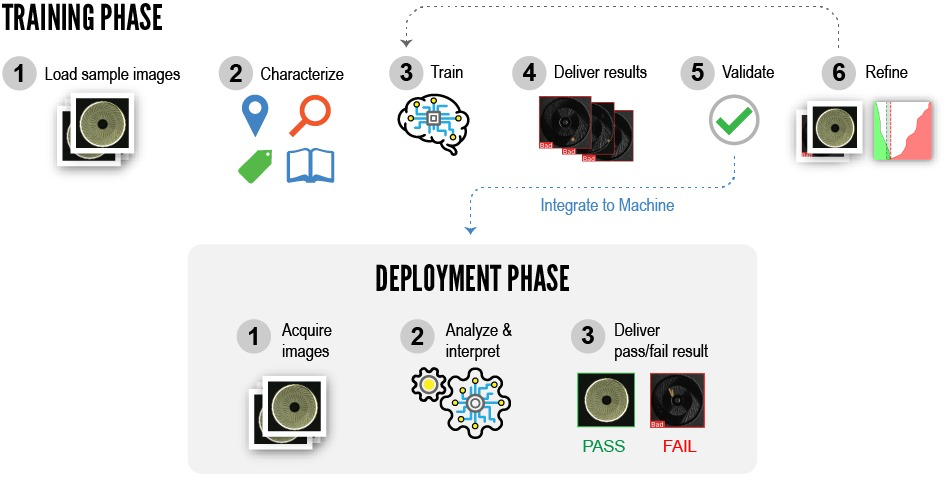
Deep learning software teaches machines to learn by example, using multi-layered neural networks trained on real images rather than hand-written rules. As it sees more examples, it keeps improving at recognising images, spotting trends and making judgment calls — the kind of tasks that come naturally to a human but are hard to script.
Deep learning vs. traditional machine vision
Traditional machine vision applies step-by-step, rule-based algorithms — reliable on consistent parts, but harder to program as exceptions and defect libraries grow. Deep learning combines the flexibility of a human inspector with the speed and consistency of a computer, and is particularly strong at:
- Complex cosmetic inspection, texture and material classification
- Assembly verification and deformed or variable feature location
- Challenging OCR, including distorted print
- Judgment calls that tolerate natural variation, without re-programming for every new example
It turns applications that once needed a vision expert into ones an engineer can train directly — reducing error rates, downtime and inspection time, and improving yields.
Implementing deep learning with Fisher Smith
There's a learning curve, and a considerable amount of work in correctly labelling and training images — we have the skill, real-world experience and hardware to train and deploy a robust solution for your application. All our hardware runs as edge inference: no data leaves site for processing, so decisions are made locally at production speeds, keeping deployments fast, secure and scalable.