Lenses & Optics
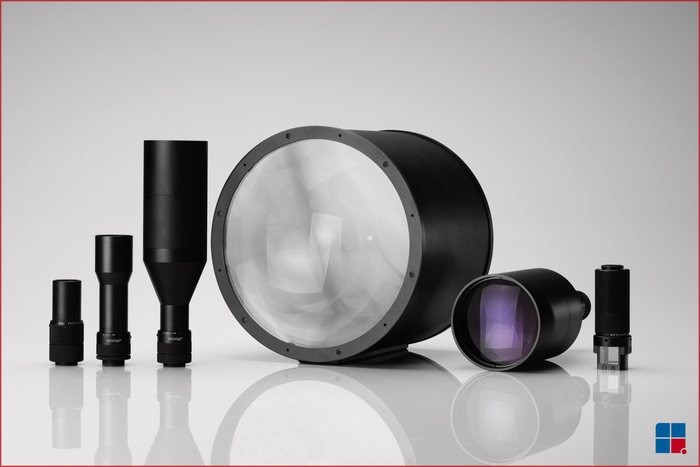
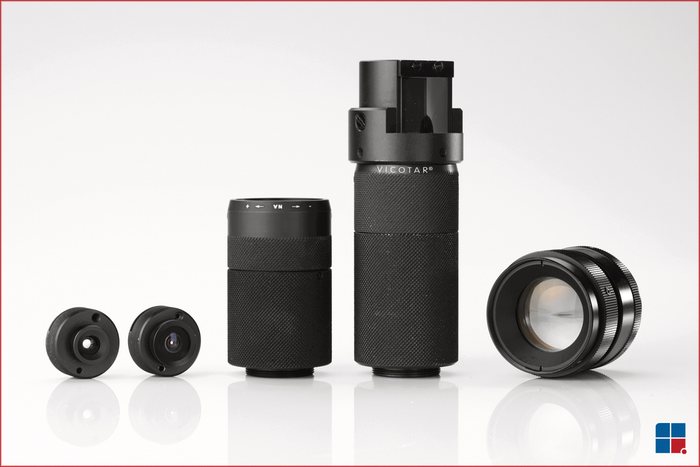
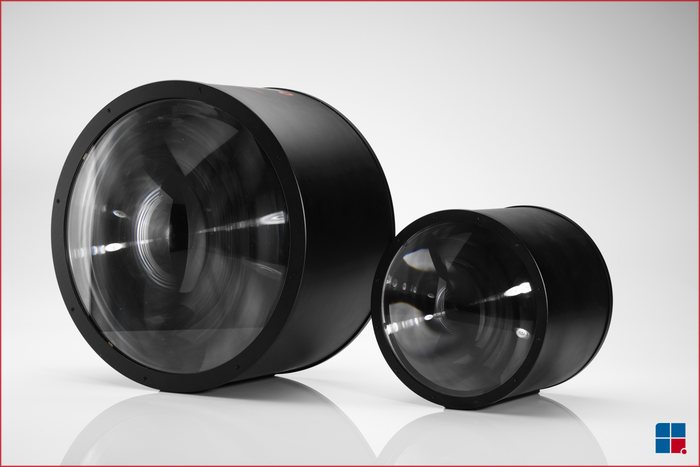
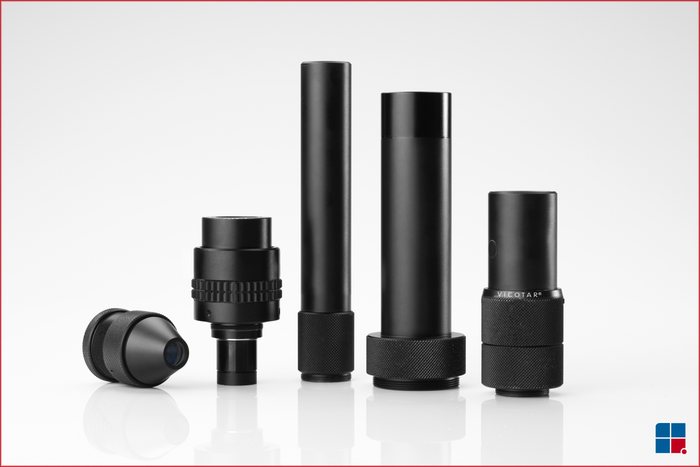
Image quality produced by machine vision systems is strongly influenced by the optics chosen as part of your lighting set up. We only work with and supply lenses and optics designed for use in industrial environments, as we understand that they must remain robust and precise under the hardest production conditions. All of our lenses have lockable adjustments to ensure reliability of your image once in use, and the range is complemented by a suite of accessories: filters, beam deflectors and mirror adapters for coaxial lighting. We also supply customised designs to suit specific OEM requirements.
- Wide angle to long focal lengths
- All with locking screws
- Fixed focus lenses
- Fixed focus with 90 degree prisms
For measurement and inspection of parts with depth
- Microscopic lenses up to 10x magnification
- Measurement lenses
- Wide-field telecentrics for large objects
- Multiple views with one lens
- Pericentric lenses for seeing the exterior sides of parts from above
- Lenses for imaging the inside surfaces of holes
- Colour, neutral and polarising filters
- Mountings and holders
- On-axis lighting adaptors
Frequently asked
What is a telecentric lens?
Telecentricity is a special case where the principal optical rays are parallel to the lens's optical axis. In an object-side telecentric, the principal rays on the object side are parallel to the optical axis, eliminating perspective errors — an object is always displayed the same size at different working distances. Telecentric lenses are generally used where distance and location of the test object can affect measurement accuracy, and are ideal for precision measurement applications. Due to the parallel beam path, telecentric lenses can be used to image critical and awkward optical surfaces and material properties, for example high gloss or optically active materials, variable edge shapes, and glass.
What is an entocentric or standard lens?
Entocentric refers to the "normal" perspective — the optical properties of such a lens correspond to how the human eye works. The farther away an object is, the smaller it appears; this phenomenon arises because of the way the lens bends light beams to reach the imaging sensor. With these lenses the magnification changes with varying working distances, so entocentric or standard lenses are only suitable for non-measurement applications. Often, with lower priced lenses, other types of distortion can also be found, especially towards the edges of the lens. These lenses can be successfully applied to colour, presence, completeness and surface inspections, as well as character, code and feature recognition.
What do you mean by "working distance"?
Working distance, or WD, is the distance between the test object and the front of the lens that is imaging it. It is very important for determining the relative positions of the object and the lens/camera. Extra optical components — for example filters, protection glass, prisms and mechanical accessories — must be included in the calculation, as these shorten the optical path. Working distance is normally given in mm.